Cuban Sofrito: The Best-Kept Secret of Creole Cooking
Learn what Cuban sofrito is, its history, essential ingredients, and how to make it to transform any Cuban dish.
4 min read
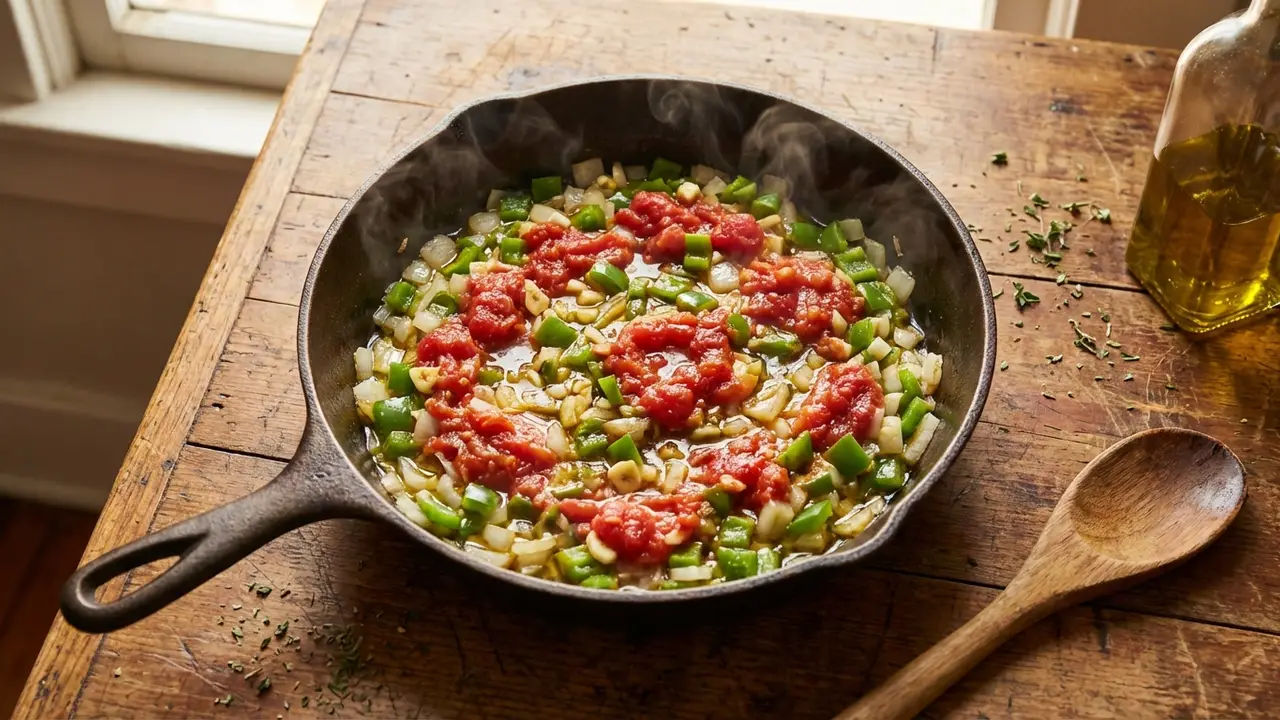
Illustration: Aroma de Cuba (AI)
If you’ve ever walked into a Cuban home at lunchtime, the first thing that hits you isn’t the sight of the steaming pot — it’s the aroma. That unmistakable perfume of onion browning with garlic and pepper in hot oil has a name: sofrito.
What is Cuban sofrito?
Sofrito is the aromatic base upon which nearly all Cuban creole cooking is built. It’s not a dish in itself but rather the first step of virtually any recipe involving a caldero (cooking pot): black beans, ropa vieja, picadillo, arroz con pollo, and so much more.
Unlike other aromatic bases around the world — the French mirepoix (onion, carrot, celery) or the Italian battuto — Cuban sofrito has its own character defined by three inseparable ingredients: onion, garlic, and pepper.
The sacred ingredients
The Cuban trinity
- White or yellow onion — The sweet base. Diced finely and cooked until translucent.
- Fresh garlic — Generous, always fresh, never powdered. Cubans don’t skimp on garlic.
- Ají (cubanelle pepper) — The Cuban green pepper, milder than common green bell pepper, brings an herbaceous flavor without heat.
The supporting cast
- Tomato — Fresh or as paste, adding acidity and color. Depending on the dish, it may be a star or absent entirely.
- Olive oil or vegetable oil — The medium where everything transforms. Traditionally, lard was used.
- Cumin — A pinch that marks the difference between a good sofrito and a memorable one.
- Dried oregano — Rubbed between your palms before adding to release its essential oils.
- Dry white wine (vino seco) — The finishing touch that deglazes the pan and adds depth.
- Bay leaf — Added to longer-cooking stews, infusing its aroma throughout.
How to make the perfect sofrito
Step by step
- Heat the oil over medium heat in a wide skillet or caldero. The oil should be hot but not smoking.
- Add the onion diced finely. Cook 3-4 minutes until translucent and beginning to brown.
- Add the pepper finely chopped. Cook 2 more minutes.
- Add the garlic crushed or very finely minced. This is crucial: 1 minute maximum. Burnt garlic will make the whole dish bitter.
- Add tomato (if the recipe calls for it), cumin, and oregano. Cook 2-3 minutes.
- Deglaze with dry wine if desired, scraping the bottom to integrate the caramelized flavors.
Abuela’s secrets
- Don’t rush the process. Sofrito needs time and medium heat. Cranking up the flame doesn’t save time — it just burns the ingredients.
- Garlic always goes in last among the trinity. It’s the most delicate and burns in seconds.
- Chop everything before you start. Once the oil is hot, there’s no time to dice.
- Listen to the pan. A constant sizzle indicates the right temperature. If it goes quiet, it needs more heat. If it splatters aggressively, turn it down.
History of sofrito in Cuba
The word sofrito comes from the Catalan sofregit (“to lightly fry”), arriving in Cuba with Spanish colonizers in the 16th century. But what we know today as Cuban sofrito is the result of centuries of culinary blending:
- Spain contributed the base technique and olive oil
- Africa brought spice intensity and the generous use of garlic
- The Taínos contributed the ají pepper, native to the Caribbean
As anthropologist Fernando Ortiz wrote about Cuban culture, everything on the island is transculturation — and sofrito is perhaps the most delicious example of that process.
Sofrito by region
While the base is universal, each province has its nuances:
- Havana — More tomato, more dry wine. Influenced by fondas and restaurants.
- Oriente (Santiago, Guantánamo) — More spices, sometimes with culantro and ají cachucha.
- Pinar del Río — Simpler, with onion and garlic predominating. Country style.
- Rural vs. urban — In the countryside, lard was the fat of choice; in cities, vegetable oil gradually took over.
Cuban sofrito vs. other Caribbean sofritos
| Feature | Cuban | Puerto Rican | Dominican |
|---|---|---|---|
| Texture | Pan-cooked | Raw blended paste | Pan-cooked |
| Base | Onion, garlic, pepper | Culantro, sweet pepper, cilantro | Onion, garlic, peppers |
| Tomato | Optional | Rare | Frequent |
| Fat | Oil/lard | Oil | Oil |
| Alternate name | — | Recaíto | Sazón |
Batch sofrito: your secret weapon
To always have sofrito ready:
- Prepare a large quantity (5-6 onions, whole head of garlic, 4-5 peppers)
- Cook to the perfect point
- Cool completely
- Distribute into ice cube trays
- Freeze and transfer to airtight bags
- Lasts up to 3 months in the freezer
Each cube equals approximately 2 tablespoons — perfect for a dish serving 4.
Sofrito is more than a cooking technique. It’s the first act of love in every Cuban meal, the aroma that connects the diaspora to the island, and proof that the best flavors come from patience and the humblest ingredients.
Small but tireless — like the zunzún bringing these flavors to you. 🌺
Frequently asked questions
What is the difference between Cuban and Puerto Rican sofrito?
Can you freeze Cuban sofrito?
Which Cuban dishes use sofrito?
Can I make sofrito without cubanelle pepper?
How we got here
Background
The first thing we published on this topic.
Cuban Coffee Harvest Promises to Be the Best in Decades
The mountains of the Sierra Maestra produce an exceptional harvest thanks to new agricultural techniques.
Ropa Vieja: The Soul of Cuban Cuisine on a Plate
Discover the history, secrets, and traditional recipe of ropa vieja, Cuba's national dish that has conquered palates around the world.
Related articles
Cuban Quimbombó: The African Stew That Conquered the Island
Traditional Cuban quimbombó recipe with pork and plantain. Afro-Cuban history, tips to reduce okra slime, and regional variants across Cuba.
Guayabita del Pinar: Cuba's Most Exclusive Artisanal Liqueur
Discover Guayabita del Pinar, the unique Cuban liqueur made from wild mini guavas. History, varieties, tasting tips, and where to find it.
Cuban Arroz con Leche: The Creamy Rice Pudding That Holds Memory
Traditional Cuban arroz con leche recipe with condensed milk, cinnamon, and lemon peel. History, tips, and variations of this beloved Cuban dessert.
Romantic Cuban Dinner: Recipes to Fall in Love on Valentine's Day
Plan a romantic Cuban dinner with irresistible recipes: from appetizers to desserts, the perfect Valentine's Day menu.
Cuban Preserves: Jams, Jellies, and Tropical Fruits in Syrup
Guide to traditional Cuban preserves: guava shells in syrup, mango jam, papaya dulce, and more tropical fruit conservas.
Cuban Ham Croquettes: Traditional Recipe and Secret Ingredients
Learn to make authentic Cuban croquetas de jamón — crispy outside, creamy inside. Step-by-step recipe with the secrets of Cuban home cooking.