The Cuban Hammock: Taíno Heritage and Tropical Relaxation Tradition
Discover the history of the Cuban hammock, its Taíno indigenous origins, traditional materials, and where to buy Caribbean hammocks.
6 min read
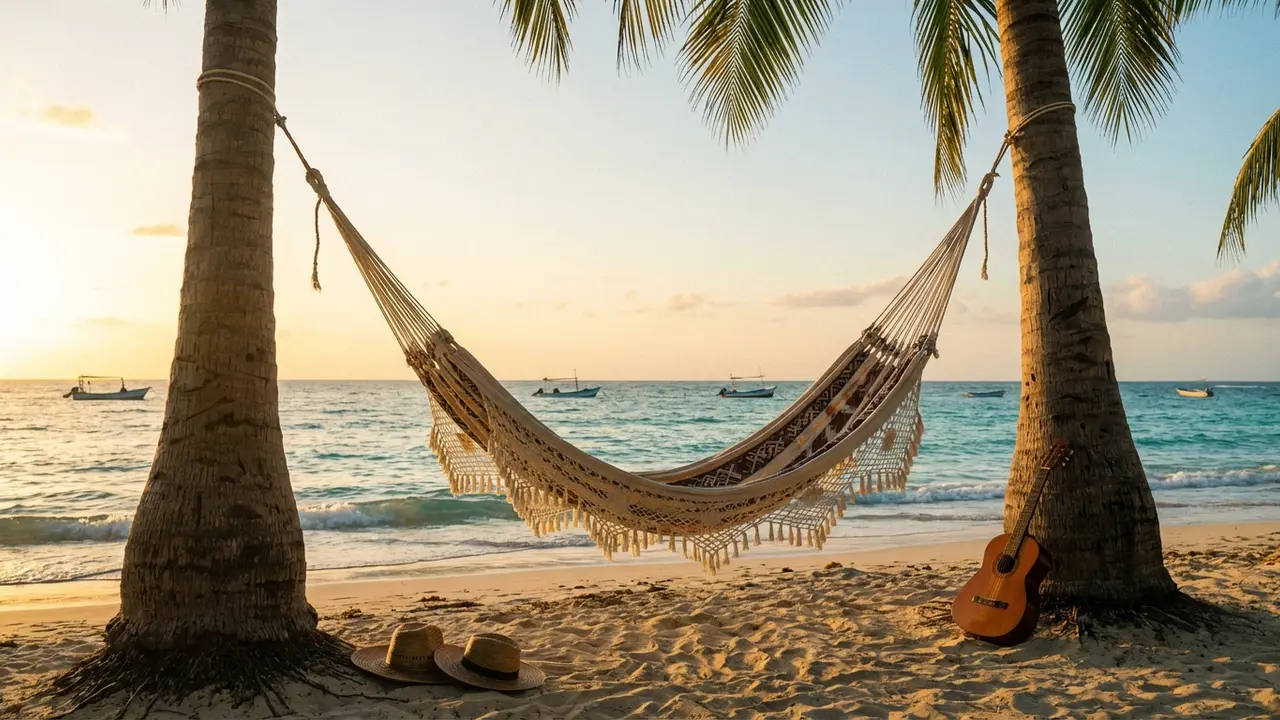
Illustration: Aroma de Cuba (AI)
The Cradle of the Gods, Born in Cuba
Long before Christopher Columbus set foot on Cuban soil in October 1492, the Taíno people were already sleeping suspended between trees in woven nets they called hamaca. That word — one of the first the Spanish adopted from the New World — became universal: hamaca in Spanish, hamac in French, Hängematte in German.
The hammock isn’t just furniture. It’s one of Cuba’s most important gifts to the world, an indigenous invention that revolutionized rest in the tropics and forever changed life at sea.
Taíno Origins: The Maka Tree Root
The Taíno people who inhabited Cuba, Hispaniola, and the Antilles wove their hammocks from the inner bark of the maka tree (Pisonia aculeata), a tropical shrub abundant across the Caribbean islands. That’s where the name comes from.
The earliest Spanish chronicles describe these “hanging beds” with amazement:
“Beds that are like cotton nets… they found them to be beds made of things resembling cotton nets” — Columbus’s Journal, 1492
The Taínos also wove them with fibers from henequén (Agave fourcroydes), majagua (Hibiscus tiliaceus), and wild cotton. They dyed them with plant-based pigments — red from annatto, black from jagua — and decorated them according to the rank of the cacique or warrior.
For the Taínos, the hammock served purposes well beyond rest:
- Primary bed in bohíos (communal houses)
- Baby cradle, rocking infants with the breeze
- Funeral shroud — the dead were wrapped in their hammock
- Status symbol — caciques had more elaborate hammocks
From Cuba to the World: A Revolution in Sleeping at Sea
Columbus took several hammocks on his first return voyage to Spain, and a quiet revolution began. European sailors — accustomed to sleeping on hard planks on damp decks — discovered that hammocks were perfect for naval life.
The British Royal Navy officially adopted the hammock in the 16th century, and for over 300 years it was the standard bed in every European fleet. Each sailor received their hammock upon enlisting and took it when they retired.
The advantages were clear:
- They swayed with the ship’s movement, preventing falls
- They took up little space and rolled up easily
- They kept sailors away from rats and floor moisture
- They were more hygienic than shared bunks
And so, a Taíno invention from Cuba’s shores ended up equipping the fleets that dominated the world’s oceans.
Traditional and Modern Materials
Historic Fibers
| Material | Origin | Characteristics |
|---|---|---|
| Henequén | Cuban agave | Resistant, durable, rustic |
| Majagua | Sea hibiscus | Flexible, soft, traditional |
| Cotton | Colonial crops | Comfortable, breathable |
| Hemp | Imported (18th c.) | Extremely durable |
Modern Materials
Today, Cuban and Caribbean hammocks are made from:
- Organic cotton — the premium option, soft and eco-friendly
- Polyester — water and weather resistant
- Nylon — lightweight, ideal for travel
- Polypropylene — affordable, colorful, most common in Cuba
Artisans in Camagüey, Holguín, and eastern Cuba maintain the tradition of weaving hammocks with inherited techniques, using hand looms and natural fibers when available.
The Hammock in Cuban Life
In Cuba, the hammock never stopped being central to daily life. In the countryside — from Pinar del Río to Guantánamo — the porch with a hammock is as iconic as the Cuban rocking chair or the 3 PM cafecito.
In the Countryside
Cuban farmers still use hammocks for:
- The afternoon siesta after lunch
- Resting during long agricultural workdays
- Sleeping on hot nights (better ventilation than a bed)
- Accommodating guests when there aren’t enough beds
In the City
In Havana and other cities, hammocks appear on:
- Balconies and rooftops of colonial buildings
- Parks and gardens (the “park hammocks”)
- Casas particulares and hostels for tourists
- Beaches in Varadero, Guardalavaca, and the cays
In Music and Culture
The hammock appears in countless sones, guarachas, and boleros as a symbol of rest, love, and tropical life. There’s no more Cuban image than a hammock strung between royal palms with the sea in the background.
Types of Caribbean Hammocks
Net Hammock (Mesh)
The most traditional, a direct descendant of the Taíno design. Woven in open mesh that allows air circulation — essential in Cuba’s heat. This is the one you’ll see on rural porches.
Fabric Hammock
Made from a continuous piece of cotton or canvas, offering more support and comfort. Popular in modern versions and export hammocks.
Brazilian Hammock
Wider, with wooden spreader bars at each end. Though not originally Cuban, it has become popular on the island for its stability.
Chinchorro
A Venezuelan and Colombian hammock variant, larger and more elaborate, woven in multiple layers. Found in some areas of eastern Cuba due to cultural proximity with the continental Caribbean.
Where to Buy Cuban Hammocks
In Cuba
- San José Market, Havana — the best artisan market
- Trinidad craft market — natural fiber hammocks
- Rural fairs in Camagüey and Holguín
In the US and Online
- Yellow Leaf Hammocks — fair-trade artisan hammocks
- Amazon — variety of Caribbean styles
- Etsy — independent artisans
- Cuban shops in Miami — Calle Ocho and Hialeah
Approximate Prices
- Basic nylon hammock: $15–30
- Artisan cotton hammock: $40–80
- Premium fair-trade hammock: $80–150
How to Choose and Care for Your Hammock
Choosing:
- Measure your space (you need 10–13 feet between anchor points)
- For indoor use, choose cotton (softer to the touch)
- For outdoor use, pick polyester or nylon (weather resistant)
- A double hammock is more comfortable even for one person
Care:
- Hand wash with mild soap
- Dry in the shade (direct sun degrades fibers)
- Store in a dry place when not in use
- Check anchor points regularly
A Legacy That Lives On
From Taíno bohíos to rural porches, from Spanish galleons to Varadero’s beaches, the Cuban hammock has traveled five centuries without losing its essence: a suspended space for rest, sleep, and contemplation.
Every time someone rocks in a hammock anywhere on the planet, they’re using an invention born on the islands of the Caribbean — a gift from Cuba’s Taíno people to the entire world.
Because in Cuba, resting is an art. And the hammock is its canvas.
Frequently asked questions
What is the origin of the word hammock?
What materials are used in traditional Cuban hammocks?
Where can I buy authentic Cuban-style hammocks?
How do you properly hang a Cuban hammock?
How we got here
Background
The first thing we published on this topic.
Habanos: Complete Guide to the Most Prestigious Cuban Cigars
Cohiba, Montecristo, Romeo y Julieta — discover the legendary Cuban cigar brands, how to choose them, and where to buy them.
Cuban Rum: Complete Guide to Brands, History, and How to Enjoy It
Discover the world of Cuban rum: from Havana Club to Santiago de Cuba. History, legendary brands, aging types, and secrets to tasting it like an expert.
Related articles
The Cuban Sillón: History & Tradition of Cuba's Rocking Chair
Guide to the Cuban sillón, the rocking chair that defines Caribbean life. History, types, craftsmen, superstitions, and where to buy Cuban rocking chairs.
The Cuban Guayabera: History, Style & Tropical Elegance
Discover the Cuban guayabera, the Caribbean's most iconic shirt. Its history from Sancti Spíritus, features, how to choose one, and where to buy.
Baracoa Chocolate: Cuba's Best-Kept Sweet Secret
Baracoa produces 75% of Cuban cacao. Discover the history, farms, and delicious chorote of this Caribbean chocolate capital.
Cuban Tropical Fruits: Mamey, Mango, Guava and Caribbean Flavors
Discover Cuba's tropical fruits: mamey sapote, Cuban mango, guava, sugar apple and papaya. Complete guide to Caribbean flavors.
The Cuban Guayabera: History, Styles and Where to Buy One
Discover the history of the Cuban guayabera, the Caribbean's most elegant shirt. Styles, fabrics, and stores to find yours.
Cuban Tropical Fruit Wines: From Pineapple to Mango in a Glass
Discover Cuba's artisanal fruit wines made from guava, pineapple, mango and more. History, wineries, and the rise of Cuban micro-enterprises.