Mariel Port to Charge USD from Private Sector Starting March
Mariel Special Development Zone will charge USD to SMEs and private actors from March 1st. State enterprises will continue paying in CUP.
4 min read
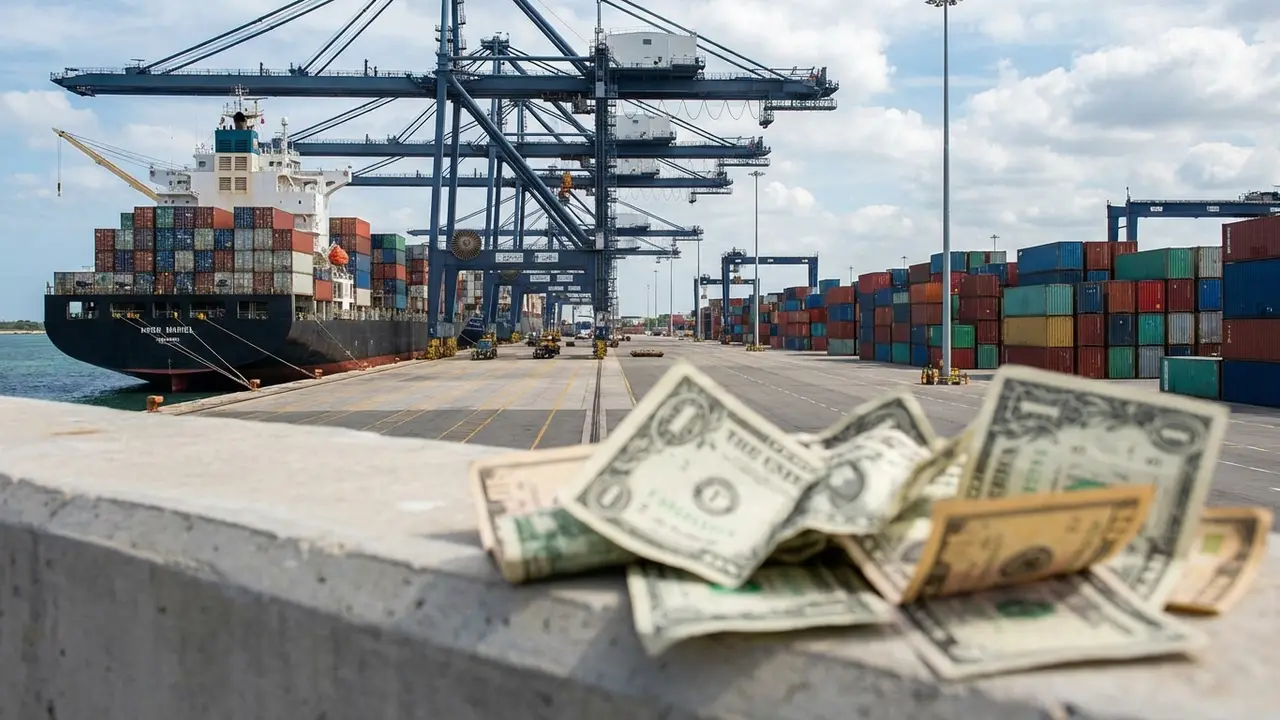
Illustration: Aroma de Cuba (AI)
The Mariel Container Terminal announced that starting March 1st it will charge in US dollars to SMEs, cooperatives, and other private actors of the Cuban economy, while exempting state enterprises from the measure, according to a document accessed by OnCuba News.
The notification, signed by Yamila Barrios, commercial director of TC Mariel on February 10th, states that the terminal will modify the currency for invoicing and payment of its services “according to the currently approved rates in the official tariff” for new economic actors.
Dual Payment System: Private in USD, State in CUP
Until now, all economic actors—state and private—invoiced in Cuban pesos (CUP). The new policy establishes a clear differentiation between the state and non-state sectors.
Private companies (SMEs, cooperatives): Charges in USD according to official rates.
State enterprises: Invoicing in CUP with the variable multiplier applied since 2021, unchanged.
This differentiation marks a milestone in deepening the partial dollarization of the Cuban economy, a process the government has been repeatedly announcing in recent months.
Another Step Toward Official Dollarization
In December 2025, the Cuban government approved a new system for managing, controlling and allocating foreign exchange backed by a decree-law and three complementary regulations published in the Official Gazette.
The mechanism applies to:
- Legal entities (national and foreign)
- Natural persons engaged in economic activity
- Local development projects
- International cooperation
As part of this strategy, in January the first wholesale store in dollars for the business sector in Cuba was inaugurated, allowing SMEs to acquire inputs without needing to exchange currency on the informal market.
Mariel: Gateway to Cuban Foreign Trade
The Mariel Container Terminal was inaugurated on January 27, 2014, as a prelude to the celebration in Havana of the II Summit of the Community of Latin American and Caribbean States (CELAC).
Located 45 kilometers west of Havana, in the Mariel Special Development Zone (ZED), it was conceived as a pole of attraction for foreign investment with tax incentives, special customs, and more flexible regulations than in the rest of the country.
With a capacity to handle 1 million TEUs (20-foot containers) annually, the Mariel port is key for imports of industrial inputs, equipment, and consumer goods entering the island.
Impact on Cuba’s Private Sector
For Cuban SMEs, the measure represents a logistical and financial challenge. Although many already operate in dollars—buying supplies in USD wholesale stores or exporting services—the mandatory payment of port services in hard currency adds pressure on their liquidity.
According to data from the Ministry of Economy and Planning, by December 2025 there were more than 11,000 registered SMEs in Cuba, mostly concentrated in gastronomy, retail trade, and services.
Charging in dollars at Mariel could limit access for small importers who don’t have foreign currency accounts or depend on the informal market to acquire dollars, where the USD is currently trading at more than 500 CUP.
Criticism and Debates
The measure has generated mixed reactions. While some private entrepreneurs see in dollarization a step toward greater exchange rate stability and access to imported inputs, others warn about the risk of deepening economic segmentation between those who have access to foreign currency and those who don’t.
Cuban economist Pavel Vidal, professor at Pontificia Universidad Javeriana Cali, stated in recent interviews that “partial dollarization is inevitable given the shortage of foreign exchange and the inability of the CUP to function as a store of value, but it must be accompanied by mechanisms that don’t exclude the most vulnerable sectors.”
What’s Next?
With the implementation of this measure, Cuba takes another step in the de facto dollarization of its economy, normalizing the use of the dollar in key commercial transactions such as foreign trade.
The real effects on the private sector remain to be seen, especially in a context of energy crisis, fuel shortages, and petroleum blockade intensified by the Trump administration, which has pushed thousands of SMEs to the brink of closure.
March 1st will mark the beginning of a new stage in the relationship between the Cuban State and its new economic actors: an increasingly dollarized relationship.
Frequently asked questions
When will Mariel Terminal start charging in dollars?
Will state enterprises also pay in dollars?
What is the Mariel Special Development Zone?
Is this the first dollarization measure in Cuba?
How we got here
Background
The first thing we published on this topic.
How Cubans Are Surviving the Fuel Rationing Crisis
Neighbors unite to cook with firewood, power cuts lasting up to 18 hours, and echoes of the Special Period. Testimonies from Havana on the energy crisis.
Cuba's Economy Contracted 5% in 2025: Study Reveals Crisis
Study confirms Cuba GDP decline, 1.5 million emigration, rising infant mortality. Critical juncture.
Related articles
Cuba Unveils '2026 Economic Program' Amid Total Collapse
Cuba's Council of Ministers rebrands its shock plan as inflation and energy deficits paralyze the island this March 2026.

Total Lunar Eclipse in Cuba This March 3: Times and Details
Everything about the total lunar eclipse visible across Cuba this March 3, 2026. Discover the best times to witness the stunning 'Blood Moon'.
Cuba's Exchange Rate Gap: The Dollar Soars in the Informal Market
The difference between the official rate and the black market for foreign currency in Cuba reaches critical levels this March 2026, impacting basic prices.
Cuba's Informal Market: Dollar Stays Stable While Euro Rises
Analysis of Cuba's informal foreign currency market today, March 13. Exchange rates for the USD, Euro, and MLC according to elTOQUE and MININT raids.

Transport Collapse in Cuba: Fuel Shortage Paralyzes the Country
The fuel crisis in Cuba reaches critical levels in March 2026, leading to a near-total paralysis of both public and private transport throughout the island.

Sudden Drop of MLC in Cuba: Volatility in Informal Currency Market
The price of the Moneda Libremente Convertible (MLC) falls to 385 CUP in Cuba's informal market, its lowest level since early March.