Cuban Stained Glass Windows: The Art of Light in Colonial Cuba
Discover Cuban vitrales and mediopuntos, unique colonial architectural gems that transform tropical sunlight into colorful art.
5 min read
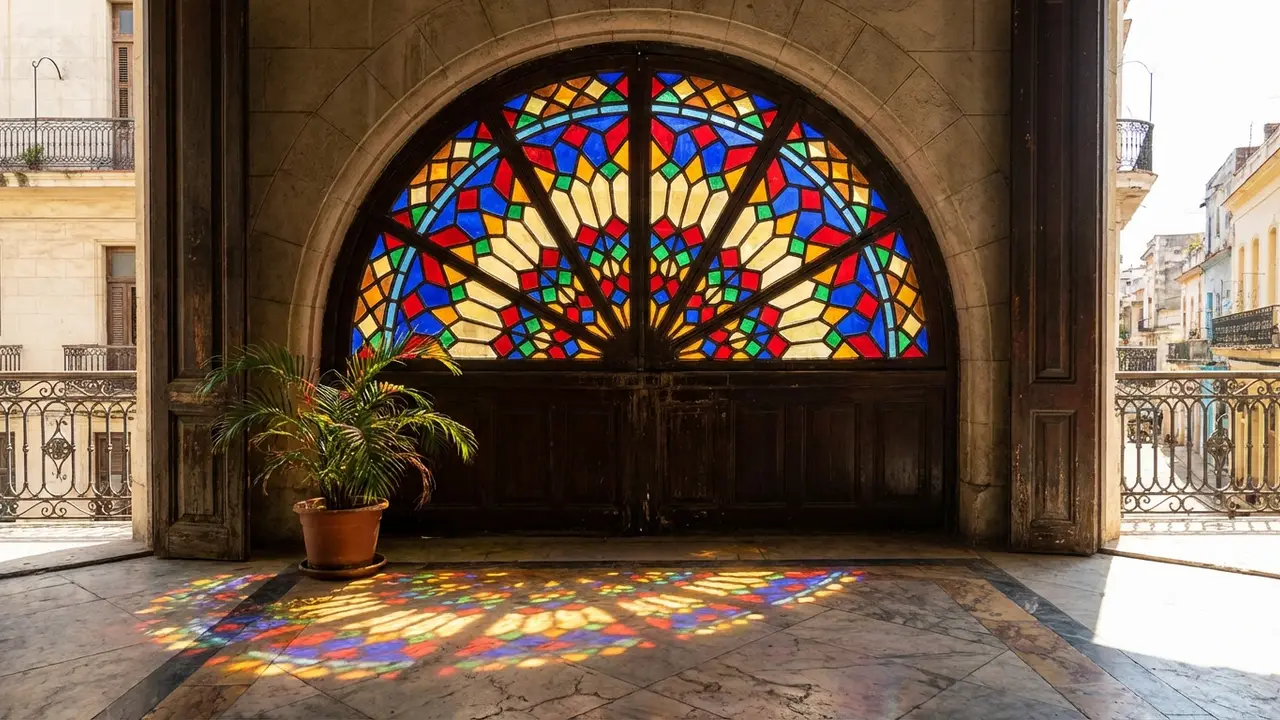
Illustration: Aroma de Cuba (AI)
Cuban Stained Glass Windows: The Art of Light in Colonial Cuba
Few experiences compare to walking through a colonial Havana mansion at mid-morning, when tropical sunlight streams through a mediopunto of red, blue, and amber glass, painting the marble floor with a kaleidoscope of colors. Cuban stained glass windows — known as vitrales — are far more than decoration: they’re Cuba’s artisanal answer to Caribbean intensity, a unique heritage that has been transforming light into art for over two centuries.
What Is a Mediopunto?
The mediopunto reigns supreme among Cuban stained glass. Its name comes from the arco de medio punto — the semicircular arch — where it sits, crowning the doors and windows of colonial mansions. Unlike European stained glass, which typically adorns cathedrals with religious scenes set in lead, the Cuban mediopunto is:
- Domestic: born in homes, not churches
- Geometric: abstract and stylized patterns dominate over narrative figures
- Wood-framed: uses the embellotado technique — grooved wooden frames — inherited from the Mediterranean
- Functional: filters blinding tropical light to create intimate, cool interiors
History: From the Mediterranean to the Caribbean
Colonial Origins (17th–18th Centuries)
Stained glass arrived in Cuba from southern Europe, likely through Spain and southern Italy. The embellotado technique — inserting colored glass fragments into grooved wooden frames — distinguishes Cuban stained glass from northern Europe’s leaded variety.
The earliest mediopuntos were practical solutions: on an island where the sun beats relentlessly and hurricanes threaten with fury, stained glass filtered glare and blocked wind while allowing ventilation. Colored glass was imported from Europe, while local glaziers cut and polished the pieces and carpenters crafted frames of extraordinary delicacy.
The Golden Age (19th Century)
Sugar and coffee wealth transformed Creole mansions into palaces. Stained glass multiplied: mediopuntos above every door, lucetas (rectangular transoms) over windows, and mamparas — decorative interior doors dividing vast salons.
Old Havana became the Western Hemisphere’s greatest concentration of domestic stained glass. Favored colors: ruby red, cobalt blue, golden amber, emerald green, and lilac.
From Old Havana to El Vedado
As elites migrated from the historic center, stained glass followed. The El Cerro neighborhood — called “the kingdom of mamparas” — housed mansions of counts and marquises with increasingly elaborate glasswork. Later, El Vedado added Art Nouveau and Art Deco influences, enriching the forms with ogival arches, horseshoe shapes, and oculi of every size.
Artisanal Techniques
Cuban Embellotado
The distinctive technique involves:
- Design: geometric patterns are traced onto templates
- Cutting: the glazier cuts and grinds each piece of colored glass
- Carpentry: grooves (bellotas) are carved into the wood, typically cedar or mahogany
- Assembly: each glass fragment is inserted and secured in its corresponding groove
- Finishing: the ensemble is sealed and polished
The result is a lacework of wood and light where the carpentry is as much the star as the glass itself.
Glass and Colors
Original glass was imported from Europe — France, Bohemia, Venice. Classic Cuban colors include:
- Ruby red: the most coveted, colored with colloidal gold
- Cobalt blue: intense and deep, evoking the Caribbean Sea
- Golden amber: warm and the most abundant in mediopuntos
- Emerald green: fresh, associated with tropical vegetation
- Lilac and violet: rarer, a sign of greater refinement
Where to See the Best Stained Glass
Old Havana
The world epicenter of domestic stained glass. Must-see locations:
- Plaza Vieja: galleries with restored arches and mediopuntos
- Calle Obispo and Mercaderes: colonial mansions with original stained glass
- Hotel Raquel: a 230-square-meter skylight, a modern masterpiece inspired by tradition
- Palacio de los Capitanes Generales: institutional stained glass from colonial power
Trinidad
Cuba’s best-preserved city features 19th-century homes with intact mediopuntos, especially around Plaza Mayor and Palacio Brunet (now the Romantic Museum).
Camagüey
With its labyrinthine layout and colonial houses, Camagüey holds lesser-known but equally splendid stained glass treasures.
Stained Glass Today: A Living Craft
Workshops in Cuba
The tradition survives thanks to artisans working in Old Havana workshops, many connected to the Office of the City Historian. These master glaziers restore colonial pieces and create new works using traditional techniques.
Places to observe and purchase pieces:
- Stained glass workshop of the City Historian’s Office (Old Havana)
- Independent artisans at the San José Fair (Almacenes de San José, Havana Harbor)
- Trinidad workshops specializing in colonial replicas
Artists in the Diaspora
In Miami, Madrid, and other cities with Cuban communities, artists keep the tradition alive. Some fuse embellotado technique with contemporary designs, creating pieces ranging from decorative panels to Tiffany-style lamps with Cuban flair.
Approximate Prices
- Small decorative luceta (12–16 inches): $50–150 USD
- Mediopunto replica (window size): $200–800 USD
- Original artistic piece: $500–3,000+ USD
- Restoration of antique piece: varies by condition and size
Cuban Stained Glass in Modern Décor
Mediopuntos have transcended colonial architecture to become contemporary decorative elements:
- Hanging panels: framed stained glass to hang in front of windows
- Room dividers: inspired by colonial mamparas
- Lamps: shades crafted with Cuban embellotado technique
- Wall art: colored glass compositions in modern frames
For those seeking the effect without artisanal costs, adhesive films and acrylic replicas imitate Cuban geometric patterns — though obviously without the magic of real glass and carved wood.
A Heritage That Illuminates
Cuban stained glass windows remind us that the most enduring art is born from necessity. What began as a practical solution against relentless sun became one of the most singular artisanal expressions in the Americas.
Every mediopunto that survives in Old Havana, Trinidad, or Camagüey tells the story of master glaziers and carpenters who, with imported glass and Cuban wood, created an empire of light and color unparalleled anywhere in the world.
Have you seen Havana’s stained glass in person? Do you have a mediopunto at home? Share your experience in the comments.
Related articles:
Frequently asked questions
What are Cuban mediopuntos?
Where can you see the best stained glass windows in Cuba?
Can you buy handmade Cuban stained glass?
How are Cuban stained glass windows different from European ones?
How we got here
Background
The first thing we published on this topic.
Habanos: Complete Guide to the Most Prestigious Cuban Cigars
Cohiba, Montecristo, Romeo y Julieta — discover the legendary Cuban cigar brands, how to choose them, and where to buy them.
Cuban Rum: Complete Guide to Brands, History, and How to Enjoy It
Discover the world of Cuban rum: from Havana Club to Santiago de Cuba. History, legendary brands, aging types, and secrets to tasting it like an expert.
Related articles
Coquitos Acaramelados: Cuba's Most Beloved Coconut Sweet
Discover the history, traditional recipe, and varieties of Cuban caramelized coconut balls — the treat that defined childhood on the island.
Cuban Casabe: The Ancient Taíno Cassava Bread, UNESCO Heritage
Complete guide to Cuban casabe, the cassava flatbread inherited from the Taínos. History, preparation, UNESCO 2024 recognition, and where to buy.

Cuban Natural Cosmetics: Perfumes, Soaps and Artisanal Beauty
Discover Cuba's natural cosmetics: Habana 1791 perfumery, Suchel Camacho, handmade soaps, and the island's rich beauty tradition.
Cuban Bread: History, Recipe, and the Palmetto Leaf Secret
Discover the history of Cuban bread from Ybor City to your table. Traditional recipe, palmetto leaf technique, and where to find it.
Cuban Chocolate and Baracoa Cacao: The Caribbean's Best-Kept Secret
Discover Baracoa cacao, the heart of Cuban chocolate. History, international brands, and the new Baracocoa venture reviving Cuba's chocolate industry.
Prú Oriental: Cuba's Ancient Fermented Drink from Haitian Roots
Discover prú oriental, a 200-year-old artisanal fermented drink made from roots and herbs in eastern Cuba's Santiago and Granma provinces.