Tinajones of Camagüey: Cuba's Iconic Red Clay Water Jars
Discover the tinajones of Camagüey, 17th-century red clay jars that define Cuba's third-largest city and its centuries-old pottery tradition.
5 min read
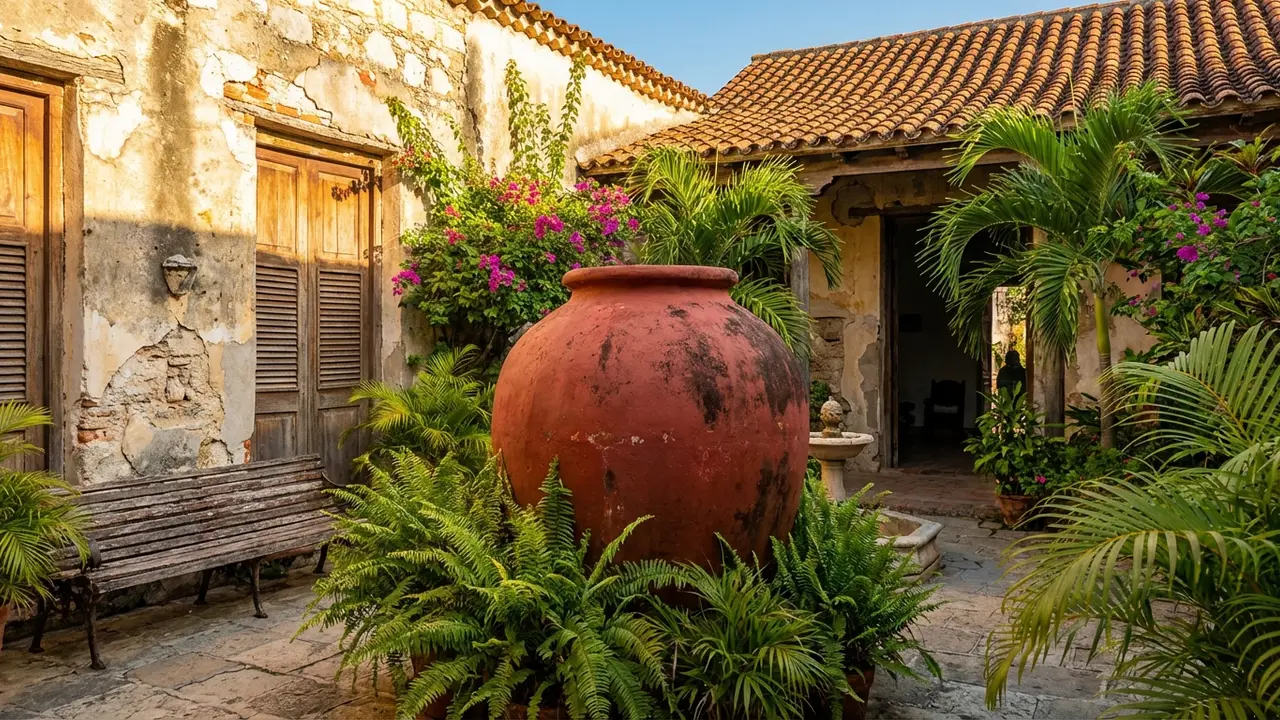
Illustration: Aroma de Cuba (AI)
The City of Tinajones
Few cities in the world are as closely identified with a single object as Camagüey is with its tinajones. These enormous red clay jars — some standing over five feet tall — have defined the urban landscape of Cuba’s third-largest city for more than four centuries.
Walking through the labyrinthine streets of Camagüey, a UNESCO World Heritage Site, means encountering tinajones at every turn: in colonial courtyards, gardens, plazas, and doorways. They are far more than decoration — they are the living memory of a city that learned to treasure water like gold.
History: From Cubitas Red Clay to National Symbol
Andalusian Roots
Tinajones trace their origins to Andalusian pottery traditions. Spanish colonizers from southern Spain brought the technique of crafting large clay vessels for storing olive oil, wine, and grain. In colonial Cuba, where fresh water was scarce, potters adapted these containers for a vital purpose: collecting and preserving rainwater.
The First Tinajones (17th Century)
From the red clay of the Sierra de Cubitas, the first tinajones were crafted around 1600. While no surviving example bears a date that early, the oldest documented piece dates to 1760. Artisans inscribed their names, personal marks, and manufacturing dates on each piece — turning every tinajón into a signed work of utilitarian art.
Rise and Decline
Production reached its peak in the mid-19th century, when virtually every Camagüey household had at least one tinajón in its courtyard. With the start of Cuba’s independence wars in 1868, production nearly ceased. It briefly recovered between 1878 and 1895 before stopping entirely.
By 1900, the city had more than 16,000 tinajones. Today only about 2,500 originals survive, though the pottery tradition has been revived since 1976 with new productions.
Anatomy of a Tinajón
The classic Camagüey tinajón has unmistakable features:
- Pot-bellied shape (amygdaloid): wide body tapering at the mouth and base
- Fired red clay: iron-rich clay from the Sierra de Cubitas
- Pronounced rim: raised crest around the mouth to channel rainwater
- Height: between 2.5 and over 5 feet
- Capacity: equivalent to a small cistern (up to 185 gallons)
- Decorations: geometric lines, reliefs, and maker’s marks
The secret to their effectiveness lay in the clay’s porosity: water stayed cool thanks to natural evaporation through the vessel walls.
Traditions and Legends
The Water Ritual
When the first rains of May fell, Camagüeyans would wash their tinajones and let those initial waters pass. Only with the second rains did they begin storing, thus avoiding embuchado — the nausea caused by water contaminated with dust from the accumulated residue in the roof channels.
The Legend of Love
Tradition holds that whoever drinks water from a Camagüey tinajón falls in love and can never leave the city. This legend has turned the tinajón into a romantic symbol, and visitors are encouraged to drink from one to ensure their return.
Hiding Place for Lovers
Numerous anecdotes tell how tinajones served as hiding spots for lovers caught in the act of romance. Their generous size allowed a man to conceal himself inside when the husband or father returned unexpectedly.
Camagüey Ceramics Today
The master potters of the past laid the foundation for Camagüey’s thriving ceramic tradition, one of the richest in Cuba. Today you’ll find:
- Traditional pottery workshops: where replicas are made using centuries-old techniques
- Ceramists’ Gathering: a biennial event bringing together artists from across Cuba
- Master Miguel Báez: recognized for recovering the original tinajón construction methods
- Contemporary decorative ceramics: artists reinterpreting the tinajón in modern art pieces
For more on Cuban craftsmanship, check out our articles on traditional Cuban crafts and stained glass mediopuntos.
Camagüey: Heritage City
Tinajones are inseparable from the urban identity of Camagüey, declared a UNESCO World Heritage Site in 2008. The city stands out for:
- Labyrinthine streets: an irregular layout unique in Cuba, reportedly designed to confuse pirates
- Colonial architecture: houses with spacious courtyards where tinajones took center stage
- Historic churches: including the Cathedral of Nuestra Señora de la Candelaria
- Plaza del Carmen: with life-sized sculptures and decorative tinajones
Where to Find Tinajones and Pottery
In Camagüey
- Historic Center: original tinajones in visitable courtyards
- Ignacio Agramonte Provincial Museum: collection of historic pieces
- Carlos J. Finlay Birth House: colonial tinajones on display
- Craft Fair: replicas and tinajón-inspired ceramics
In the Diaspora
- Cuban-American artisans in Miami and other cities create scale reproductions
- Latin craft shops with pieces inspired by the Camagüey tradition
A Symbol That Transcends
The tinajón has outgrown its original function to become an emblem of identity. It appears on Camagüey’s coat of arms, in the poetry of Nicolás Guillén, in troubadour songs, and in the collective imagination of all Cubans. It is proof that a utilitarian object — born from the need for water — can become the very soul of a city.
Like Cuban coffee or rum, the tinajón is Cuba made object: resilient, generous, and full of stories.
Frequently asked questions
What is a Cuban tinajón?
How many original tinajones remain in Camagüey?
Why is Camagüey called the City of Tinajones?
Where can I buy tinajones or Camagüey-style pottery?
How we got here
Background
The first thing we published on this topic.
Habanos: Complete Guide to the Most Prestigious Cuban Cigars
Cohiba, Montecristo, Romeo y Julieta — discover the legendary Cuban cigar brands, how to choose them, and where to buy them.
Cuban Rum: Complete Guide to Brands, History, and How to Enjoy It
Discover the world of Cuban rum: from Havana Club to Santiago de Cuba. History, legendary brands, aging types, and secrets to tasting it like an expert.
Related articles
Torticas de Morón: Cuba's Beloved Lime-Scented Shortbread Cookies
Authentic recipe for torticas de Morón, traditional Cuban shortbread cookies with lime zest from Ciego de Ávila province.
Cuban Cocktails: Mojito, Daiquiri, Cuba Libre and More Classics
Complete guide to Cuba's most famous cocktails: mojito, daiquiri, cuba libre and other iconic drinks born in Havana bars.
Cuban Tropical Fruits: Mamey, Soursop and Caribbean Treasures
Guide to Cuba's most iconic tropical fruits: mamey sapote, soursop, custard apple, star apple and more. Flavors, history and where to buy.
Cuban Preserves: Jams, Jellies, and Tropical Fruits in Syrup
Guide to traditional Cuban preserves: guava shells in syrup, mango jam, papaya dulce, and more tropical fruit conservas.
Cuban Guava Pastelitos: The Flaky Pastry That Stole Miami's Heart
History, recipe, and secrets of Cuban pastelitos de guayaba y queso. From golden puff pastry to guava filling, Cuba's most addictive sweet bite.
Essential Cuban Condiments: Sour Orange, Bijol, and Adobo Criollo
Complete guide to the Cuban condiments that define our cuisine: sour orange, bijol, adobo criollo, cumin, and oregano.