Torticas de Morón: Cuba's Beloved Lime-Scented Shortbread Cookies
Authentic recipe for torticas de Morón, traditional Cuban shortbread cookies with lime zest from Ciego de Ávila province.
5 min read
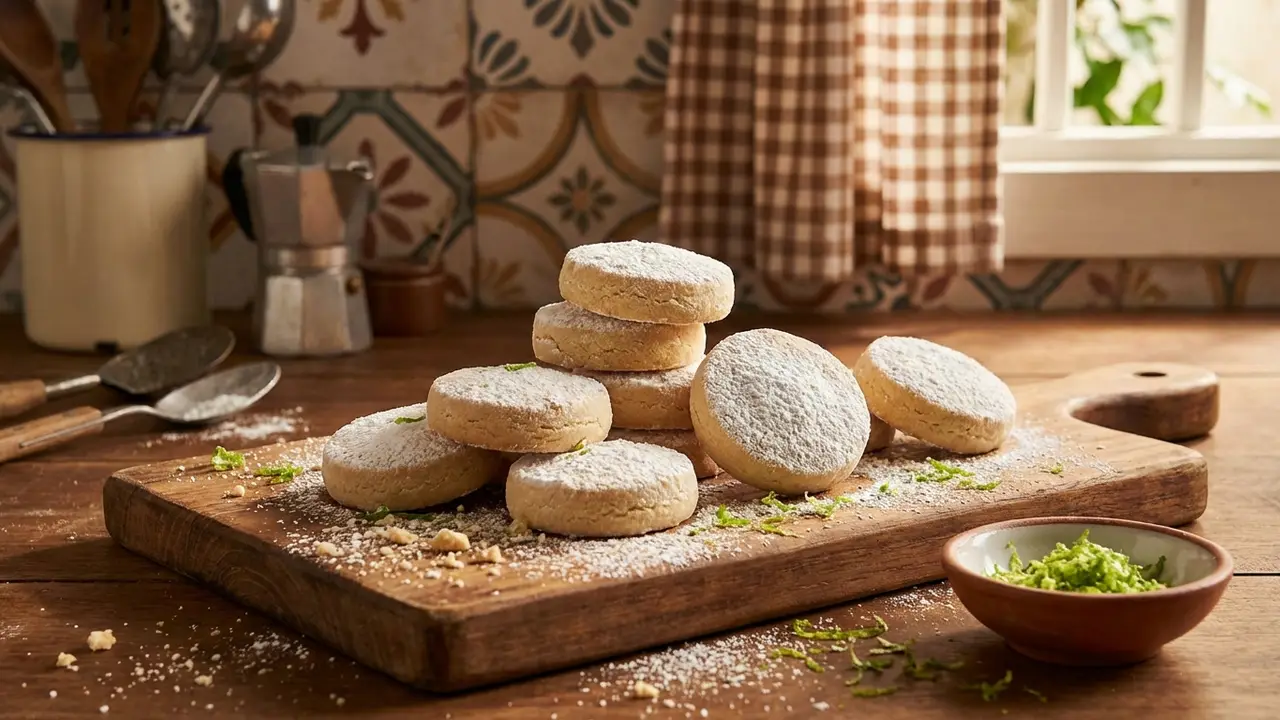
Illustration: Aroma de Cuba (AI)
Some cookies you eat. Others you remember. Torticas de Morón belong firmly in the second category — a crisp, crumbly bite that dissolves on your tongue, releasing the unmistakable perfume of fresh lime zest that is pure Cuban tropics.
Born in the city of Morón, in Ciego de Ávila province, these cookies are a cornerstone of Cuban baking. With just five ingredients and a technique any Cuban grandmother has mastered, torticas de Morón prove that culinary greatness needs no complications.
The Origin: Morón, City of the Rooster
Morón is famous for two things: its Rooster of Morón — the sculpture that greets visitors at the city entrance — and its torticas. Nestled in central Cuba among sugarcane fields and citrus groves, the city had the perfect conditions for this recipe to be born: abundant lard from rural pig farming and lime trees growing in every backyard.
The recipe passed through generations of local bakers. Some culinary historians link them to the Spanish polvorones that arrived during the colonial era, but the addition of lime zest made them something entirely Cuban. Where the Andalusian polvorón uses cinnamon, the tortica de Morón uses Caribbean citrus.
Over time, the torticas spread beyond Ciego de Ávila. Today you’ll find them in bakeries across Havana, at the ventanitas of Miami, and in diaspora kitchens worldwide, where making them is an act of nostalgia and love.
Ingredients
This recipe yields approximately 24-30 cookies, depending on your cutter size.
| Ingredient | Amount |
|---|---|
| Lard (or unsalted butter) | 225 g (½ pound) |
| White sugar | 1 cup (200 g) |
| All-purpose flour, sifted | 4 cups (480 g) |
| Lime zest | 1 whole lime |
| Vanilla extract | 1 teaspoon |
| Powdered sugar for dusting | To taste |
Ingredient Notes
Lard is the secret to authentic texture. It’s what makes the tortica crumble perfectly when you bite it, like a flawless shortbread. If you can’t find it, unsalted butter works, but the experience will be different.
Lime zest (limón criollo in Cuba) is non-negotiable. Don’t use lemon or orange — the fragrance of lime is what sets torticas de Morón apart from every other cookie in the world.
Step-by-Step Instructions
1. Cream the Lard and Sugar
In a large bowl, mix room-temperature lard with sugar. Work with a wooden spoon until you get a pale, fluffy cream. This takes about 5-8 minutes by hand — patience here defines the final texture.
2. Add the Lime and Vanilla
Zest the lime directly over the mixture. Only the green part — the white pith is bitter. Add the vanilla and mix well. At this point, your kitchen fills with an aroma that is pure Cuba.
3. Incorporate the Flour
Add sifted flour in three batches, mixing gently after each addition. The dough should be soft, pliable, and not sticky. If too sticky, add flour one tablespoon at a time. If too dry, a teaspoon of cold water.
4. Roll and Cut
On a floured surface, roll the dough to half-centimeter thickness. Use a round cutter to shape the cookies and place them on a parchment-lined baking sheet, spaced a couple of centimeters apart.
5. Bake
Bake in a preheated oven at 180°C (350°F) for 15-20 minutes. The torticas should be barely golden at the edges — don’t let them darken too much. They’ll be soft out of the oven and firm up as they cool.
6. Dust with Powdered Sugar
Once warm (not hot), dust generously with powdered sugar. This isn’t decoration — it’s an essential part of the flavor. The white cloud of sugar over the golden cookie is the classic image of torticas de Morón.
Variations and Family Secrets
Like any self-respecting Cuban recipe, torticas de Morón have as many versions as families who make them:
- With shredded coconut: Some families in eastern Cuba add fine shredded coconut, connecting this recipe to the coconut traditions of Baracoa.
- With almonds: A more refined variant that incorporates ground almonds for a denser texture and richer flavor.
- With butter: The diaspora version, where butter replaces the lard that isn’t always easy to find abroad.
- Half-moon shaped: Some Havana bakeries make them as half-moons instead of rounds.
Torticas in Cuban Culture
In Morón, torticas aren’t just a dessert — they’re a badge of local identity. They appear at food festivals, at Mother’s Day celebrations, and as a mandatory gift when someone visits from out of town.
For the Cuban diaspora, making torticas de Morón is a ritual of memory. Every lime zested, every tray pulled from the oven, is a conversation with the grandmother who taught the recipe, with the neighborhood bakery that no longer exists, with a Cuba that lives on in the palate.
Perfect Pairings
Torticas de Morón practically demand a strong Cuban coffee. The intensity of a cafecito contrasts perfectly with the cookie’s gentle sweetness. They also pair beautifully with:
- Hot chocolate on cool afternoons
- A mamey milkshake for double the cubanía
- Sweet wine as an after-dinner treat
A Small Bite with an Enormous Soul
Torticas de Morón are proof that Cuban baking needs no exotic ingredients or French techniques to create something unforgettable. Five ingredients, an oven, and the zest of a green lime are enough to travel to Ciego de Ávila without leaving your kitchen.
Make them, share them, and when someone asks what’s in them, tell them what every Cuban grandmother knows: lard, flour, sugar, lime, and love. Especially the love.
Love Cuban sweets? Don’t miss our recipes for guava pastries, buñuelos, and Cuban natilla.
Frequently asked questions
What are torticas de Morón?
Can I make torticas de Morón with butter instead of lard?
How long do torticas de Morón stay fresh?
Why are they called torticas de Morón?
How we got here
Background
The first thing we published on this topic.
Cuban Coffee Harvest Promises to Be the Best in Decades
The mountains of the Sierra Maestra produce an exceptional harvest thanks to new agricultural techniques.
Ropa Vieja: The Soul of Cuban Cuisine on a Plate
Discover the history, secrets, and traditional recipe of ropa vieja, Cuba's national dish that has conquered palates around the world.
Related articles
Cuban Coconut Sweet: The Traditional Dessert That Tastes Like Home
Learn to make authentic Cuban dulce de coco with this traditional recipe, its history from Baracoa, and delicious variations.
Cuban Ham Croquettes: Traditional Recipe and Secret Ingredients
Learn to make authentic Cuban croquetas de jamón — crispy outside, creamy inside. Step-by-step recipe with the secrets of Cuban home cooking.
Cuban Ham Croquetas: From Spain to Miami, the Perfect Bite
History, traditional recipe, and secrets of Cuban croquetas de jamón — the crispy snack that traveled from France to Spain and conquered Cuba.
Picadillo a la Habanera: Cuba's Most Beloved Everyday Dish
The history, traditional recipe, and secrets of Cuban picadillo — the humble ground beef dish that conquered every table in Cuba.
Cuban Organic Honey: The Caribbean's Golden Treasure Conquering Europe
Cuba produces 100% organic honey without pesticides. Discover why Cuban honey is conquering European markets and its beekeeping history.
Cuban Preserves: Jams, Jellies, and Tropical Fruits in Syrup
Guide to traditional Cuban preserves: guava shells in syrup, mango jam, papaya dulce, and more tropical fruit conservas.