Santiago de Cuba: Birthplace of Son, Revolution and Caribbean
Complete guide to Santiago de Cuba: what to see, where to go, and how to experience Cuba's most Caribbean city. History, music, and beaches.
5 min read
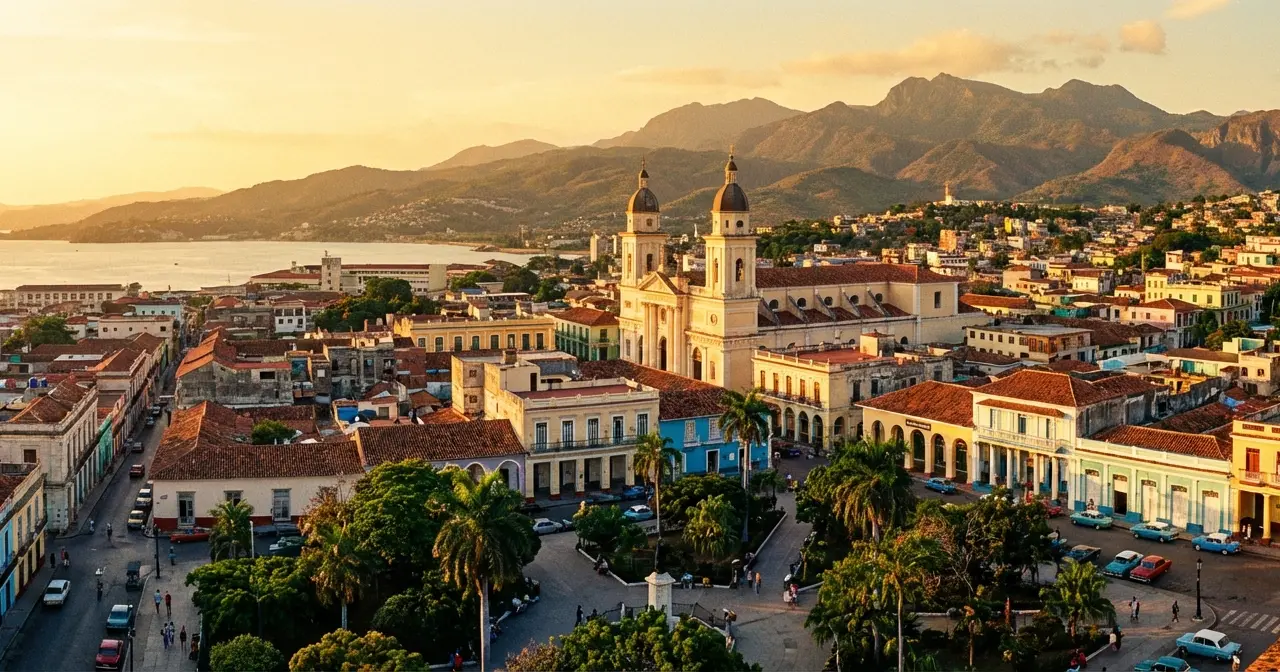
Illustration: Aroma de Cuba (AI)
Santiago de Cuba needs no introduction, but it deserves one. Cuba’s second city, birthplace of son cubano, and epicenter of the 1959 revolution, Santiago is the most Caribbean city in Cuba — and arguably its most authentic.
Nestled between the Sierra Maestra mountains and the sea, this city of half a million pulses with a rhythm you won’t find anywhere else on the island. Here, music isn’t entertainment: it’s oxygen.
Why Santiago is different
While Havana faces the Gulf of Mexico, Santiago faces the Caribbean. That geographic orientation isn’t just trivia — it defines the city’s culture. French and Haitian influence arrived with colonists fleeing the Haitian Revolution in the late 18th century, leaving a deep mark on music, food, and religious traditions.
The result is a unique cultural blend: Spanish, African, French, and Taíno, all filtered through the heat of eastern Cuba.
What to see in Santiago de Cuba
Parque Céspedes and the historic center
The heart of Santiago is Parque Céspedes, surrounded by iconic buildings: the Cathedral of Our Lady of the Assumption (housing the remains of Diego Velázquez), City Hall (from whose balcony Fidel Castro proclaimed the revolution’s triumph on January 1, 1959), and the Casa de Diego Velázquez, the oldest colonial house in Cuba (1522).
San Pedro de la Roca Castle (El Morro)
A UNESCO World Heritage Site since 1997, this 17th-century fortress commands the entrance to Santiago’s bay. Designed by Italian engineer Giovanni Battista Antonelli, the castle houses a piracy museum and offers spectacular sunset views.
Santa Ifigenia Cemetery
One of Latin America’s most important cemeteries. Here rest José Martí (in his hexagonal mausoleum designed to receive a ray of sunlight every day), Carlos Manuel de Céspedes, Emilio Bacardí, and Fidel Castro (since 2016). The changing of the guard ceremony every 30 minutes at Martí’s tomb is solemn and moving.
Moncada Barracks
On July 26, 1953, a group of revolutionaries led by Fidel Castro stormed this military barracks, symbolically launching the Cuban Revolution. Today it’s a museum and school, with bullet holes preserved in the facade.
Casa de la Trova
Founded in 1968, Santiago’s Casa de la Trova is Cuba’s most famous. Son, bolero, and trova are performed live every night. Compresora, the Septeto Santiaguero, and other local groups keep the tradition alive. If you visit Santiago and skip this place, you haven’t visited Santiago.
Music: where son was born
Santiago de Cuba is the birthplace of son cubano, the genre that gave rise to salsa, mambo, and cha-cha-chá. It was here, in the neighborhoods of Tivolí and Los Hoyos, that this fusion of Spanish guitar and African rhythms emerged in the late 19th century.
The Trío Matamoros, the Sexteto Habanero (which was actually from Santiago), and Compay Segundo all call this city home. For lovers of Cuban music, Santiago is a mandatory pilgrimage.
Santiago’s Carnival
Santiago de Cuba’s Carnival (July) is the oldest and most vibrant in the Caribbean. Comparsas — music and dance groups representing each neighborhood — parade through the streets with congas, Chinese trumpets, and overwhelming energy. Los Hoyos, San Agustín, and San Pedrito compete annually for the title of best comparsa.
Unlike other Caribbean carnivals, Santiago’s has deep Afro-Cuban roots, with traditions dating back to the 17th century.
Beaches near Santiago
- Playa Siboney (20 km): the closest, popular with locals, with seafood restaurants.
- Playa Daiquirí (30 km): yes, this is where the cocktail was invented. A quiet beach with history.
- Chivirico (80 km): where the Sierra Maestra meets the sea. Spectacular scenery.
- Playa Maguana (150 km, Baracoa): continue east for one of Cuba’s most pristine beaches.
Sierra Maestra: adventure at the doorstep
Santiago is the gateway to the Sierra Maestra, Cuba’s highest mountain range. From here you can organize treks to Pico Turquino (6,476 ft, Cuba’s highest point), a 2-3 day hike passing through the former guerrilla camp at La Plata.
For more nature destinations, check our guides to Ciénaga de Zapata and the Viñales Valley.
Where to stay
Casas particulares (private homestays) are the best option in Santiago. The Vista Alegre neighborhood offers stately homes with gardens, while the historic center puts you steps from everything. Prices range from $25-40 USD per night with breakfast.
For hotels, the Hotel Casa Granda (facing Parque Céspedes) is a classic with a panoramic terrace. Hotel San Basilio is a boutique option with colonial charm.
Santiago’s cuisine
Santiago has its own culinary personality:
- Congrí oriental: unlike Havana’s moros y cristianos, this version uses red beans.
- Bacán: a green plantain tamale, a Haitian heritage dish.
- Pru: a fermented drink made from roots and herbs, exclusive to eastern Cuba.
Explore more of Cuban cuisine in our gastronomy articles.
Practical tips
Transport from Havana: Viazul buses run daily (13-15 hours, around $50). Cubana de Aviación flights cover the route in 1.5 hours. Trains are also available, though less reliable.
Weather: Santiago is hotter than Havana. From May to October, temperatures exceed 90°F. Bring sunscreen, water, and light clothing.
Currency: Since monetary unification, the Cuban peso (CUP) is the only currency. Carry cash — ATMs don’t always work.
Internet: There are Wi-Fi zones at Parque Céspedes and other spots, but connectivity is limited. Buy ETECSA cards on arrival.
Santiago de Cuba doesn’t compete with Havana — it complements it. If Havana is Cuba’s face, Santiago is its soul. Come for the history, stay for the music, return for everything else.
Frequently asked questions
What is the best time to visit Santiago de Cuba?
How do you get to Santiago de Cuba from Havana?
Is Santiago de Cuba safe for tourists?
What makes Santiago de Cuba different from Havana?
How we got here
Background
The first thing we published on this topic.
Old Havana Restoration Reaches a New Milestone
Rehabilitation work in the historic quarter reveals colonial frescoes from the 18th century.
Governments Issue Travel Warnings for Cuba Amid US Tensions
Canada, Argentina, Spain and other countries warn citizens about Cuba's crisis as Washington's oil blockade and prolonged blackouts affect the island.
Related articles
Trinidad, Cuba: The Time-Frozen City That Became a UNESCO Gem
Explore Trinidad, Cuba's best-preserved colonial city and UNESCO World Heritage Site since 1988. History, architecture, music, and the Sugar Mills Valley.
Varadero: complete guide to Cuba's most famous beach
Everything about Varadero: best beaches, hotels, excursions, practical tips and how to reach Cuba's most spectacular Caribbean peninsula.
The Cuban Bolero: The Music of Love Born in Santiago de Cuba
Discover the history of the Cuban bolero, from Pepe Sánchez to Olga Guillot. How this romantic genre conquered Latin America.
Jardines de la Reina: the Caribbean's best diving is in Cuba
Discover Jardines de la Reina, Cuba's protected archipelago with sharks, pristine reefs, and world-class diving.
Cuban Timba: The Most Explosive Music Born in Havana
Discover Cuban timba, the genre that fused son, funk, and rumba in the 1990s. History, key bands, and rhythms conquering the world.
Carnival of Santiago de Cuba: The Caribbean's Oldest Street Party
History, traditions, and magic of the Santiago de Cuba Carnival — from colonial mamarrachos to the congas that shake the streets every July.