Cuban Aguardiente: The Sugarcane Spirit That Forged a Nation
Discover the 500-year history of Cuban aguardiente, from colonial alembics to backyard chispa de tren. Tradition, production, and culture.
6 min read
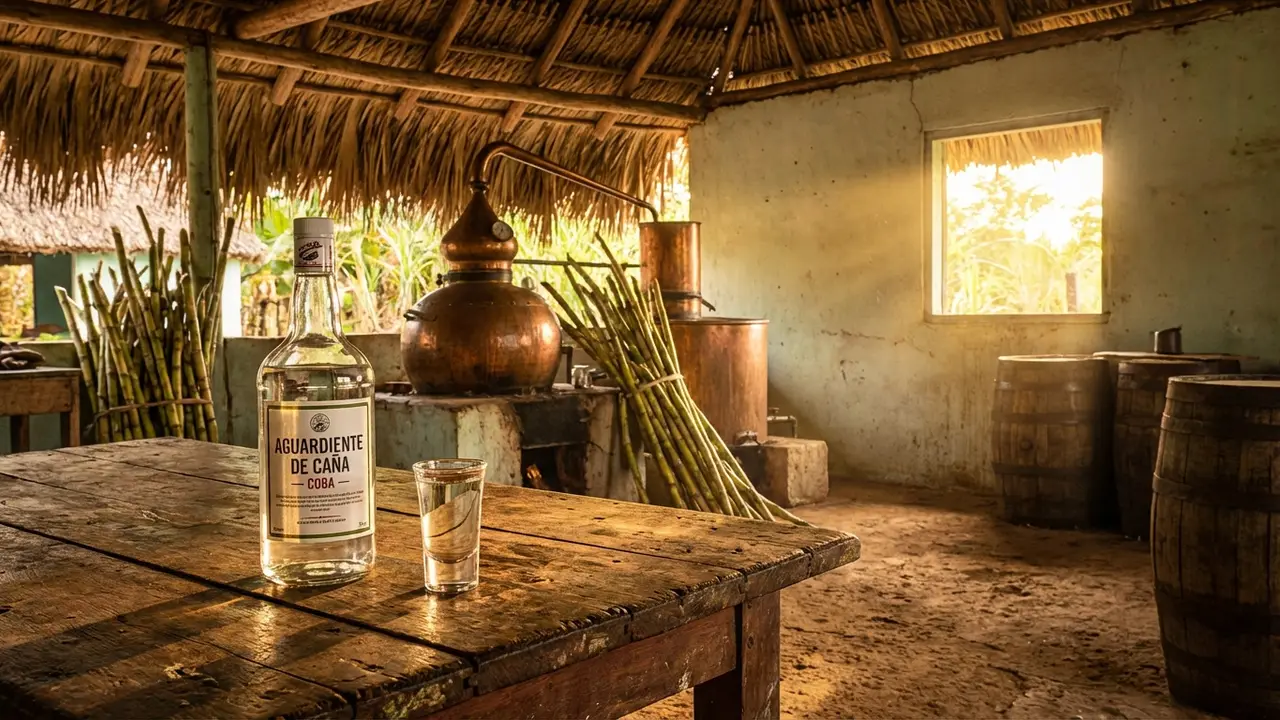
Illustration: Aroma de Cuba (AI)
Cuba’s First Drink
Before Cuban rum existed, before names like Havana Club or Santiago de Cuba graced bottles in bars worldwide, there was a clear, harsh, honest liquid that burned on the way down: aguardiente de caña.
This primitive distillate wasn’t born in a modern factory or launched with a marketing campaign. It was born in the crude alembics of 16th-century sugar mills, where enslaved workers discovered that heated fermented molasses produced a potent spirit capable of making you forget — at least for a while — the hardships of colonial life.
Cuban aguardiente is, literally, the island’s first distilled product. And its history is the history of Cuba itself.
From Sugar Mills to Smuggling: 16th to 18th Century
Aguardiente production in Cuba dates back to the early 1500s. Nearly every sugar mill that processed sugarcane produced aguardiente as a natural byproduct of milling.
The business grew so large it became a direct competitor to the wines and grape spirits Spain exported to its colonies. The Crown’s response was predictable: taxes and bans.
Key dates in the aguardiente wars
- 1687: Sugarcane aguardiente taxed higher than Spanish wine
- 1714: Royal decree bans aguardiente production in Cuba
- 1764: Spain gives up and decides to tax it instead of banning it
- 1765: Puerto Rico already prefers Cuban aguardiente over grape spirits — it was cheaper and stronger
- 1790: Cuba authorized to trade aguardiente on slave routes, opening the door to international markets
By the late 18th century, Cuban aguardiente was known as Aguardiente Rum — the direct precursor to the rum that would conquer the world.
Cañambrule, Caña, and Other Names
One of the most fascinating things about Cuban aguardiente is its lexical richness. Every era and social class gave it a name:
- Cañambrule: early colonial term, from French cannambrûlée (burnt cane)
- Caña: the popular name that survives today — “a shot of caña”
- Aguardiente Rum: 18th-century commercial name
- Chispa de tren (train spark): homemade moonshine, named for its potency
- Mofuco: Cuban slang for illegal distillate
- Espérame en el suelo (wait for me on the floor): because that’s where you end up
- Coladito: home-filtered aguardiente
These names aren’t mere linguistic curiosities. They reflect a popular culture that never stopped distilling — not when the Crown banned it, not when the government regulated it.
The Process: From Trapiche to Alembic
The aguardiente-making process has changed surprisingly little in five centuries:
1. Milling
Sugarcane is pressed through the trapiche (mill) to extract guarapo (juice). Molasses — a byproduct of sugar crystallization — also serves as raw material.
2. Fermentation
The juice or molasses ferments in tanks for 24 to 72 hours. Yeasts convert sugars into alcohol, producing a low-proof “cane wine.”
3. Distillation
The fermented liquid is heated in an alembic (traditionally copper). Alcohol evaporates before water, condenses, and is collected. The result: raw aguardiente at 60-80% ABV.
4. Dilution
It’s cut with water to reach 40-50% ABV, the drinking strength.
The difference from rum lies in what doesn’t happen: aguardiente isn’t charcoal-filtered, doesn’t pass through continuous distillation columns, and isn’t aged in oak barrels. It’s the distillate in its purest, most direct form.
Chispa de Tren: The Underground Tradition
Every time Cuba enters an economic crisis, homemade aguardiente resurfaces with force. It happened in the 1960s, during the Special Period of the 1990s, and it’s happening again in the current crisis.
The reason is simple: when industrial rum becomes scarce or unaffordable for the average Cuban, people return to their roots. An improvised alembic made from an old tank, a copper coil, and a wood fire can produce aguardiente in any backyard.
Chispa de tren — so named because “it ignites like a locomotive” — is part of Cuban resolver (the art of making do). It’s illegal, sometimes dangerous (poorly separated methanol can cause blindness), but it’s a tradition that centuries of prohibition haven’t been able to eliminate.
Aguardiente in Cuban Culture
Aguardiente isn’t just a drink. It’s woven into Cuba’s cultural DNA:
In music
Son cubano and guaracha are full of aguardiente references. The folk saying goes: “Give them a sip of caña to ease their sorrow.” Aguardiente fuels the guateque campesino, the rural Cuban party.
In Santería
In Afro-Cuban traditions, aguardiente is a mandatory offering to several orishas. It’s sprinkled on the ground for the dead, offered to Elegguá at crossroads, and used in purification rituals.
In folk medicine
Cuban grandmothers always kept a bottle of aguardiente “for the aches.” It served as a dental anesthetic, wound disinfectant, cold remedy, and base for preparing herbal medicines.
In the countryside
The Cuban guajiro (farmer) and his aguardiente are inseparable. Morning cafecito, an after-lunch cigar, and an evening sip of caña form the holy trinity of rural Cuban life.
Brands and Where to Buy
While artisanal aguardiente dominates in Cuba, commercial options exist:
In Cuba
- Aguardiente de Caña AZCUBA: state production, available at bodegas when in stock
- Local distilleries: every province has its producers, especially in sugarcane regions like Villa Clara, Matanzas, and Camagüey
International
- Ron Legendario Aguardiente de Caña Natural: Cuban brand distributed in Europe
- Caña Brava (Panama): following the Caribbean cane spirit tradition
- Clairin (Haiti): Caribbean cousin of Cuban aguardiente, increasingly popular among craft spirit enthusiasts
Cuban MiPymes
With the opening of small and medium enterprises in Cuba, some entrepreneurs have begun producing artisanal spirits with greater care and quality, including premium cane aguardientes.
From Aguardiente to Rum: A Cuban Evolution
The story of Cuban aguardiente doesn’t end with rum’s arrival — aguardiente is rum. Or more precisely, rum is what happens when aguardiente is refined.
The turning point came in the 19th century when master distillers like Facundo Bacardí applied charcoal filtration and oak barrel aging techniques. The result was a smoother, more complex, more marketable spirit.
But in Cuba’s rural areas, in the bateyes and fincas, raw aguardiente never disappeared. While major distilleries produced rum for the world, farmers kept making their caña just as their great-grandparents had.
A Spirit That Won’t Quit
Cuban aguardiente has survived for more than 500 years. It survived Spanish Crown prohibitions. It survived competition from industrial rum. It survived revolutionary government regulations. And it’s still there, being distilled in backyards from Camagüey to Guantánamo.
It is, perhaps, Cuba’s most authentic product: born from sugarcane, made by hand, shared among neighbors. No luxury labels, no advertising campaigns, no international awards. Just fire, cane, and the infinite stubbornness of the Cuban people.
Because in Cuba, as long as there’s sugarcane, there’ll be aguardiente. And as long as there’s aguardiente, there’ll be reason to toast.
Frequently asked questions
What is the difference between Cuban aguardiente and rum?
What is chispa de tren in Cuba?
How long has aguardiente been produced in Cuba?
Can you buy Cuban aguardiente outside Cuba?
How we got here
Background
The first thing we published on this topic.
Cuban Coffee Harvest Promises to Be the Best in Decades
The mountains of the Sierra Maestra produce an exceptional harvest thanks to new agricultural techniques.
Habanos: Complete Guide to the Most Prestigious Cuban Cigars
Cohiba, Montecristo, Romeo y Julieta — discover the legendary Cuban cigar brands, how to choose them, and where to buy them.
Related articles

The Cuban Sillón: History & Tradition of Cuba's Rocking Chair
Guide to the Cuban sillón, the rocking chair that defines Caribbean life. History, types, craftsmen, superstitions, and where to buy Cuban rocking chairs.

The Cuban Hammock: Taíno Heritage and Tropical Relaxation Tradition
Discover the history of the Cuban hammock, its Taíno indigenous origins, traditional materials, and where to buy Caribbean hammocks.
Cuban Tropical Fruit Wines: From Pineapple to Mango in a Glass
Discover Cuba's artisanal fruit wines made from guava, pineapple, mango and more. History, wineries, and the rise of Cuban micro-enterprises.
Guayabita del Pinar: Cuba's Most Exclusive Artisanal Liqueur
Discover Guayabita del Pinar, the unique Cuban liqueur made from wild mini guavas. History, varieties, tasting tips, and where to find it.
Cuban Bread: History, Recipe & the Tradition of Pan Cubano
Discover Cuban bread (pan cubano), its history from Ybor City to Havana bakeries, traditional recipe, and where to buy it.
Cuban Preserves: Jams, Jellies, and Tropical Fruits in Syrup
Guide to traditional Cuban preserves: guava shells in syrup, mango jam, papaya dulce, and more tropical fruit conservas.