Cuban Posters: The Graphic Art That Conquered the World
Discover Cuban posters from ICAIC and OSPAAAL, their legendary designers, and where to collect original vintage prints.
4 min read
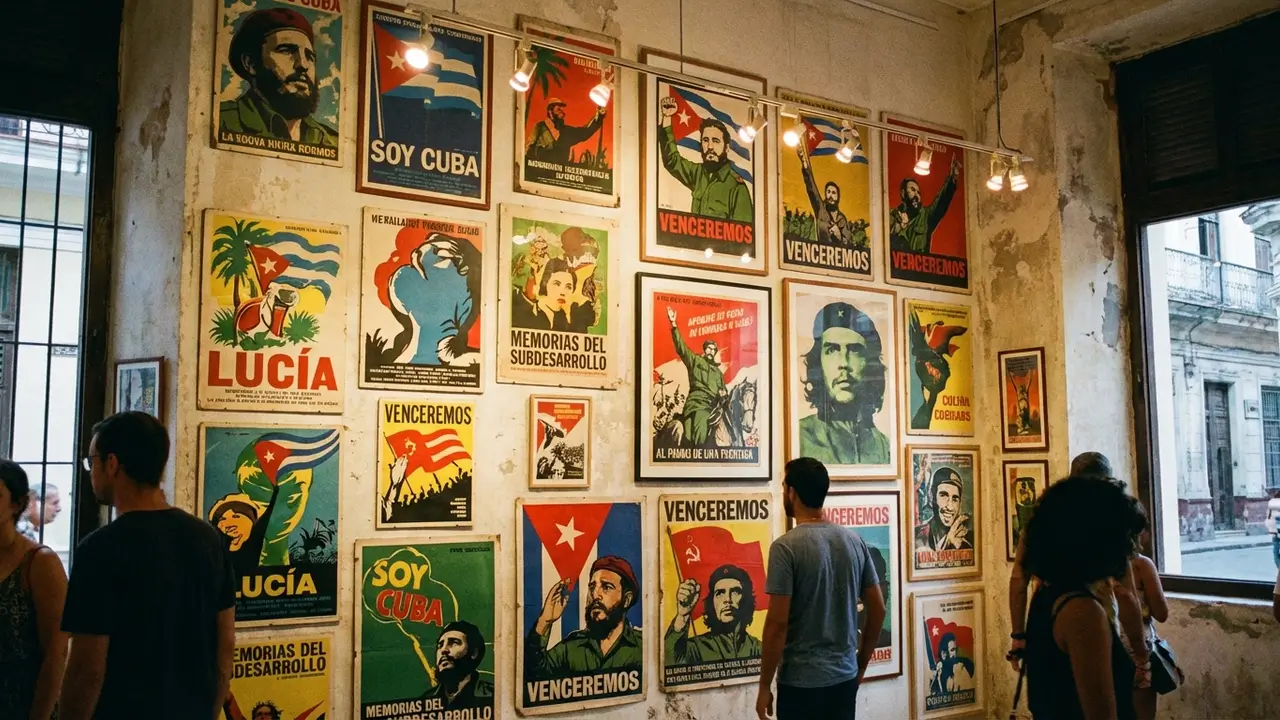
Illustration: Aroma de Cuba (AI)
Few countries treat a poster as high art. Cuba is one of them. Since the 1960s, the island has produced some of the most original, daring, and collectible posters in the world — pieces that now hang in MoMA, the Smithsonian, and private collections where originals fetch thousands of dollars.
We’re not talking about commercial advertising. Cuban posters were born from cultural revolution — from the need to communicate with zero budget and boundless imagination.
ICAIC: Where Cinema Became Graphic Art
It all started in 1959 with the founding of the Cuban Institute of Cinematographic Art and Industry (ICAIC). ICAIC didn’t just produce films — it needed to promote them. And in a Cuba without a commercial advertising industry, they gave artists free rein.
Saúl Yelín, one of ICAIC’s founders, was the visionary who recruited young designers with a simple instruction: do whatever you want. No corporate clients to please, no focus groups, no restrictions. The result was an unprecedented creative explosion.
The Masters of Cuban Poster Art
- Eduardo Muñoz Bachs (1937–2001): Born in Valencia, Spain, he arrived in Cuba at age 4. He created over 2,000 posters for ICAIC. His style — flat colors, humor, simplified figures — is perhaps the most recognizable in Cuban design.
- René Azcuy Cárdenas (1939–2009): Master of graphic portraiture and high contrast. His posters for films like Lucía are icons of Latin American design.
- Antonio Fernández Reboiro (1935–): A radical experimenter who brought psychedelia and op art to Cuban poster art.
- Alfredo Rostgaard (1943–2004): Creator of the famous Canción protesta poster featuring a rose and nail. His OSPAAAL work defined the solidarity aesthetic.
- Raúl Martínez (1927–1995): Pioneer of Cuban silkscreen printing since 1943. His pop portraits of José Martí and Che Guevara fused pop art with national identity.
The Technique: Artisanal Silkscreen
ICAIC posters were mostly produced using silkscreen (serigrafía), a technique that allowed short runs of 500 to 2,000 copies. Each poster was essentially an original graphic work — hence their current value as collectibles.
The artisanal process — hand-separated colors, vibrant inks, variable-quality paper — gave each print a unique character that industrial lithography could never replicate.
OSPAAAL: Art as International Solidarity
If ICAIC posters promoted cinema, OSPAAAL posters promoted revolutions. The Organization of Solidarity of the Peoples of Asia, Africa, and Latin America was founded in Havana in 1966 after the Tricontinental Conference. OSPAAAL published its Tricontinental magazine with a fold-out insert: a solidarity poster.
These posters were distributed free to over 80 countries for decades. They supported independence in Vietnam, Angola, Mozambique, Palestine — any Third World liberation cause. Design was the weapon.
Most Iconic OSPAAAL Posters
- “Day of the Heroic Guerrilla” (Rostgaard, 1968): The stylized Che that became a global symbol.
- “Nixon” (Reboiro, 1972): A distorted portrait of the US president, now valued at over $3,000.
- “Solidarity with Vietnam” (various artists): A series that defined the anti-war graphics of the 60s-70s.
Where to Buy and Collect Cuban Posters
Originals (Investment)
Original ICAIC and OSPAAAL posters are collector’s items with prices ranging from $200 to over $10,000 depending on artist, condition, and rarity.
- eBay - Home of the Cuban Posters: The largest store of originals, with inventory classified by decade and type.
- International Auctions: Christie’s and Sotheby’s include Cuban posters in their graphic art sales.
- Lincoln Cushing Archive: A researcher and collector who has cataloged thousands of Cuban posters.
Reproductions (Décor)
For those who want the aesthetic without the collector’s price tag:
- Etsy: High-quality reproductions, giclée prints, and framed posters.
- Amazon: More commercial selection but accessible.
- In Havana: The Taller Experimental de Gráfica in Cathedral Square sells contemporary prints and silkscreens.
In Cuba
If you visit the island, these are the key spots:
- Taller Experimental de Gráfica (Old Havana): Founded in 1962, it still produces original graphic work.
- ICAIC Gallery (Vedado): Occasionally exhibits and sells posters from the archive.
- Havana Book Fair: A space to find posters and prints from Cuban publishers.
The Legacy: From Posters to Contemporary Art
Cuba’s graphic tradition didn’t stop in the 60s. Today, a new generation of designers continues the legacy:
- Nelson Ponce and Giselle Monzón keep the film poster tradition alive with contemporary aesthetics.
- The Digital Art Salon has expanded Cuban graphics into the digital realm.
- Collectives named after masters like Azcuy train new designers.
Cuban posters prove something few cultural products achieve: they are simultaneously art, history, and objects of desire. From a wall in Old Havana to an auction house in London, they still speak with the same visual power they had over half a century ago.
Interested in Cuban art? Read about Cuban musical instruments and Cuban music labels like EGREM.
Frequently asked questions
Why are Cuban posters so valuable to collectors?
Who are the most famous Cuban poster designers?
Where can I buy original Cuban posters?
What's the difference between ICAIC and OSPAAAL posters?
How we got here
Background
The first thing we published on this topic.
Cuban Music Conquers the Latin Grammys
Cuban artists sweep the ceremony with awards in multiple tropical music categories.
Old Havana Restoration Reaches a New Milestone
Rehabilitation work in the historic quarter reveals colonial frescoes from the 18th century.
Related articles
Cuban Poster Art: The Graphic Design Movement That Changed the World
The history of Cuban cartelismo, from ICAIC film posters to OSPAAAL solidarity art. How Cuba created a revolutionary graphic design language.
Ernesto Lecuona: The Cuban Gershwin Who Conquered the World
Life and legacy of Ernesto Lecuona, Cuba's most prolific composer with over 600 works that defined Latin music worldwide.
Bad Bunny at Super Bowl LX: Cuba Present on the World's Biggest Stage
Bad Bunny included the Cuban flag in Super Bowl LX, moving Cubans amid crisis. Analysis of the most Latino halftime show in history.
Coppelia Ice Cream: Cuba's Cathedral of Ice Cream Turns 60
The history, flavors, and current state of Havana's iconic Coppelia ice cream parlor, Cuba's sweetest institution since 1966.
Nueva Trova: Silvio Rodríguez, Pablo Milanés and Cuba's Revolution
The history of Cuba's Nueva Trova movement, where Silvio Rodríguez and Pablo Milanés fused poetry, guitar, and revolution into songs that shaped Latin America.
Cuban National Ballet: The School Alicia Alonso Gave the World
The history of Cuba's Ballet Nacional, founded by Alicia Alonso in 1948. From the Gran Teatro de La Habana to the world's greatest stages.