No Cultural Blackout: Cuba Takes Art to the Streets Amid Crisis
As Cuba faces its worst fuel crisis in decades, the country reorganizes cultural life: artists go to neighborhoods and the Book Fair is postponed.
4 min read
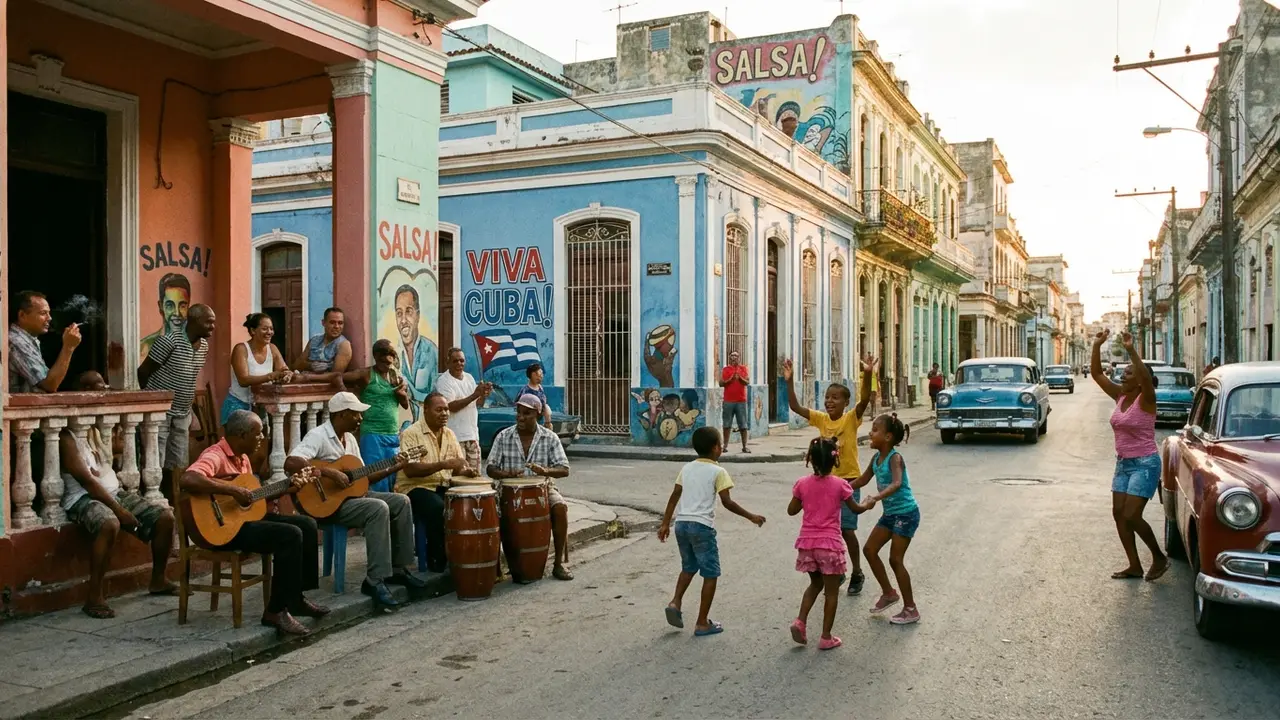
Illustration: Aroma de Cuba (AI)
“There can be no cultural blackout.”
With those words, Cuba’s Culture Minister Alpidio Alonso drew a line in the sand. As the island faces its worst fuel shortage in decades — triggered by tightened U.S. sanctions under Trump’s new executive orders — the country’s cultural life is being reinvented. Not by choice, but by necessity.
Art Goes to the People
The strategy is straightforward: if people can’t come to the theater, the theater comes to them.
In early February 2026, Cuba’s Ministry of Culture announced a sweeping reorganization of the national arts program. Large theaters and concert halls, unsustainable under current electricity rationing, are giving way to community spaces: neighborhood parks, municipal houses of culture, street corners, and front porches.
In Havana, activities are concentrated in beloved spaces like John Lennon Park in Vedado and the Monkey Farm, where the celebrated children’s theater company La Colmenita continues performing. In Las Tunas, the Amancio Rodríguez House of Culture runs its “Saturday with My People” program. In Guantánamo, young art instructors teach changüí dancing and music in community workshops.
“We’re going to the communities, to the stages closest to where our artists live” — Alpidio Alonso, Minister of Culture
The Book Fair: Postponed, Not Dead
The most painful decision was the postponement of the 34th Havana International Book Fair, Cuba’s largest cultural event. Traditionally held at the historic Morro-Cabaña fortress complex, the fair draws hundreds of thousands of visitors and is, for many Cubans, their only annual chance to buy new books.
The Cuban Book Institute pledged that publishing won’t stop. The plan includes:
- Digital publications to maintain access to literature
- Limited print editions with available resources
- Neighborhood book presentations as a decentralized alternative
- Author meetups in houses of culture and community spaces
The fair had faced disruptions during the COVID-19 pandemic, but this marks the first postponement due to an energy crisis.
The University of the Arts Adapts
Cuba’s 37 art education centers and the University of the Arts (ISA) — one of Latin America’s most prestigious arts institutions — are keeping classes going, but with significant changes:
- Redesigned schedules adapted to rolling blackouts
- Decentralized enrollment: students integrate into municipal schools
- Art specialties taught at company headquarters and cultural institutions
- ISA daytime courses: shifted to hybrid learning
- Graduate programs: fully remote
It’s a model forced by crisis, but one that could leave a lasting positive mark: bringing arts education closer to communities historically far from major cultural centers.
Precedents: Cuban Art and Crisis
Cuba has a long history of creating under extreme conditions.
During the Special Period of the 1990s, when the Soviet Union’s collapse left Cuba without its main economic partner, some of the most powerful cultural expressions in Cuban history emerged. Independent cinema found new voices, Cuban music reinvented itself with timba, and visual art pushed bold new boundaries.
During the COVID-19 pandemic, artists across the island brought concerts to balconies, created digital content, and organized gatherings in courtyards. The response was so remarkable that the Ministry now invokes it as precedent: “Just as there was an extraordinary response from artists during COVID, there will be one now.”
Critical Voices
Not everyone welcomes these measures with optimism. Independent voices point out that state-promoted “community art” tends to be controlled art: fragmented, local, and symbolically limited.
The case of El Ciervo Encantado is telling. This experimental theater group, founded in 1996 and censored in 2024, announced a complete break from state cultural institutions after 30 years. Director Nelda Castillo denounced a systematic policy of exclusion against art that questions power.
Meanwhile, Cuba’s book publishing output has plummeted over 70% between 2019 and 2024 according to official data, and the ICAIC operates at minimal production levels.
Culture as a Barometer
Cuba’s history proves something: when culture goes dark, something far deeper is being lost. And when it resists — even on a street corner, with a guitar and a cajón — something essential survives.
In these days of blackouts and scarcity, the promise of “no cultural blackout” is both a statement of principle and a risky bet. Because Cuban culture doesn’t live in ministries or official speeches. It lives in the son echoing through a Centro Habana doorway, in the poem a teacher recites in the dark, in the rumba that needs no electricity to light up the soul.
Want to explore more Cuban culture? Read about UNESCO-heritage rumba, Guantánamo’s changüí, and the legacy of Benny Moré.
Frequently asked questions
Was the Havana Book Fair 2026 cancelled?
What does 'no cultural blackout' mean in Cuba?
How does the 2026 crisis affect art education in Cuba?
Have Cuban artists responded to crises like this before?
How we got here
Background
The first thing we published on this topic.
Cuban Music Conquers the Latin Grammys
Cuban artists sweep the ceremony with awards in multiple tropical music categories.
Old Havana Restoration Reaches a New Milestone
Rehabilitation work in the historic quarter reveals colonial frescoes from the 18th century.
Related articles
Celia Cruz: The Queen of Salsa and Her Legendary Centennial
The life and legacy of Celia Cruz, Cuba's Guarachera. Her 2025 centennial reaffirmed her throne as the undisputed queen of Latin music.
Cuban Photography: From Korda to Today, the Eye That Captured Cuba
The history of Cuban photography: Alberto Korda, Raúl Corrales, the iconic Che image, and new photographers documenting Cuba today.
Tropicana: The Paradise Under the Stars That Dazzled the World
The history of Havana's Tropicana cabaret from 1939 to today. Architecture, shows, and its enduring Cuban cultural legacy.
Cuban Hip-Hop: From Alamar to the World, Cuba's Rap Revolution
The history of Cuban hip-hop from Alamar to today. How rap became the voice of a generation during Cuba's Special Period crisis.
Benny Moré: The Wildman of Rhythm Who Defined Cuban Music
Life and legacy of Benny Moré, Cuba's greatest singer. From the sugarcane fields of Lajas to conquering Havana and Mexico with his unique voice.
Cuban National Ballet: The School Alicia Alonso Gave the World
The history of Cuba's Ballet Nacional, founded by Alicia Alonso in 1948. From the Gran Teatro de La Habana to the world's greatest stages.